If you’re new to electric bikes or shopping for one and are unsure of the jargon and terminology you might encounter – read on. We’ve explained the basics of e-bike batteries here using the most frequently asked questions that come up with our customers.
Electric bikes are powered by rechargeable Lithium-ion batteries that have a high energy content in a compact space and are lighter than other rechargeable batteries. When properly designed, manufactured and used correctly, lithium-ion batteries are a safe technology.
Lithium-ion batteries can be reused repeatedly; they store energy using lithium ions gliding between an anode and a cathode to store and release electrical energy as required. Due to their high energy density and efficiency, lithium-ion batteries are used in mobile phones, laptops and electric cars. Lithium-ion batteries contain less toxic substances and are easier to recycle compared to lead-acid and nickel batteries.

Lithium-ion batteries
- Take 2 to 5 hours to charge, depending on how flat it is.
- Variables like riding style, carrying heavy loads, climbing hills, and riding in extreme weather affect your battery’s range per ride.
- A high-quality Lithium-ion battery typically provides 500 to 1000 full charge cycles (approx 20,000–56,000 km).
- Lithium-ion batteries naturally degrade over time, even if left unused. A well-cared-for battery generally lasts between 3 and 8 years.
Battery position: most e-bikes have one of these batteries…
- Integrated/internal batteries – the battery is slim and is hidden inside the frame of the e-bike
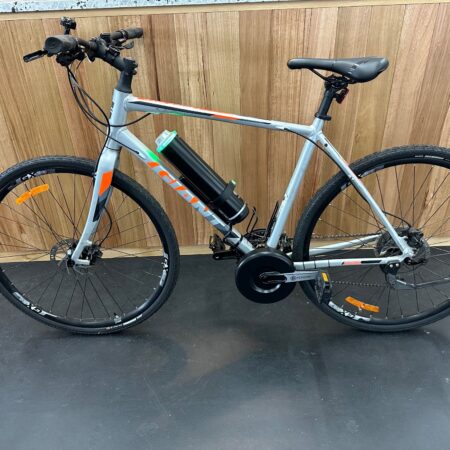
- Frame-mounted external batteries – usually attached to the downtube of the bike with a special mounting/housing
- Rack-mounted external batteries – located on the pack rack on the back of the bike
Service life*
- Batteries are wearing parts. Even when not in use, they age over time due to chemical reactions in the battery cells. This is referred to as calendar ageing.
- The battery ages faster when exposed to high temperatures or when stored at low or high states of charge.
- The so-called cyclical ageing of the battery is caused by charging and discharging processes. The more intensively a battery is used, the faster it ages cyclically.*Info from Bosch AusNz.

Electric bikes do not charge when you pedal them. It is also very rare for e-bikes to have regenerative braking like an EV might have. This is mainly because the mass of an e-bike is low compared to a car, so the amount of energy you can recover is quite small.
Charging
All e-bike batteries have a separate charger unit that you plug into a wall outlet.
Charge the battery on the bike
- Insert the charging plug on the charger into the charging socket on the bottom of the battery mount, and connect the power plug to the wall outlet.
- Connect the charger to the battery first, before plugging the charger into the electrical outlet. This ensures proper connection before the electricity starts flowing.

Charge the battery off the bike
- Insert the key to unlock the battery and carefully remove the battery from the battery mount.
- Connect the charger to the battery first, before plugging the charger into the electrical outlet.
- Disconnect the battery and charger from the power supply after charging.
Battery locked
Batteries are locked to the frame of the bike with a key, so there’s no need to take the battery with you if you park your bike. You can unlock your battery and take it off the frame to charge it or for storage.

E-Bike Battery terminology

Volts: The battery’s maximum voltage usually 36V or 48V.

Amp Hours: How much energy the battery can store. It’s like the size of your fuel tank. More Ah = you can ride longer.

Watt Hours: (Voltage × Amp hours) also a measurement of how much energy the battery can store. More Wh = you can ride longer on a single charge.

Charge Safely
✅ Always use the charger that came with the e-bike. Just because the plug fits, it doesn’t mean it’s compatible.
✅ Charge your battery when you are at home and awake, and unplug it once charging is complete.
✅ Always charge an e-bike in a dry, sheltered location, preferably indoors and protected from the weather – like a shed or garage (not in or near living spaces like bedrooms or living rooms). Make sure you have a working smoke alarm in this space.
✅ Charge on a hard surface like tiles or concrete. Keep the area clear of paper, bedding, textiles and flammable materials.
WARNINGS:
Don’t use or charge batteries that are swelling or bulging, leaking, or overheating. Batteries that show any signs of damage should be disposed of carefully as they carry the risk of becoming involved in a fire.
Damaged batteries and battery-powered devices include:
- Batteries that show signs of swelling or bulging, leaking, cracks, dents, punctures, or crushing
- Overheated batteries that may have vapours or smoke
- Batteries that have gotten wet or have been in water
- Batteries that have been in or exposed to fire.
Only use chargers that show visible approval marks and comply with Australian Standards.
Charging a device or battery with the wrong power output (voltage and current) can cause damage to the battery and overheat it, which can cause a fire.
Avoid low quality conversions, repairs, and upgrades
A significant proportion of incidents involving lithium-ion batteries are from equipment that has been built or engineered by inexperienced people.
Working with lithium-ion batteries can be highly dangerous. E-Bike mechanics cannot repair or service damaged batteries – they need to be disposed of. Serious injuries and fatalities have occurred when batteries have been mishandled. Low quality batteries have led to fires, causing significant damage.
Disposing E-Bike Batteries
Lithium-ion batteries are banned from regular landfill rubbish collections. Use a safe battery drop-off site.
Local Council Transfer Stations: Most Melbourne metro and regional council resource recovery centres accept large e-bike and e-scooter batteries (call ahead to confirm size limits)
B-Cycle Battery recycling: Australia’s official battery stewardship scheme Find a location here.